Antidrug Antibodies for Ranibizumab, Biosimilar Equivalent Low in Treated nAMD Patients
Immunogenicity not associated with efficacy, safety of either
12/15/2022
Liz Meszaros, Deputy Managing Editor, BreakingMED™
Anupama Brixey, MD, Assistant Professor in Cardiothoracic Imaging, Oregon Health and Science University
Results from a post-hoc analysis of a randomized, double-masked, parallel-group phase III equivalence study showed that in patients with neovascular age-related macular degeneration, the incidence of antidrug antibodies was low for ranibizumab products.
Results also showed that immunogenicity did not seem to have a clinically relevant association with their efficacy, safety.
Immunogenicity had no association with the efficacy and safety of ranibizumab and SB11—its biosimilar equivalent—in patients with neovascular age-related macular degeneration (nAMD), according to a recent study published in JAMA Ophthalmology.
Researchers found no clear association between overall immunogenic positivity and pharmacokinetics, and their results support the biosimilarity of ranibizumab and SB11, with no differences in safety.
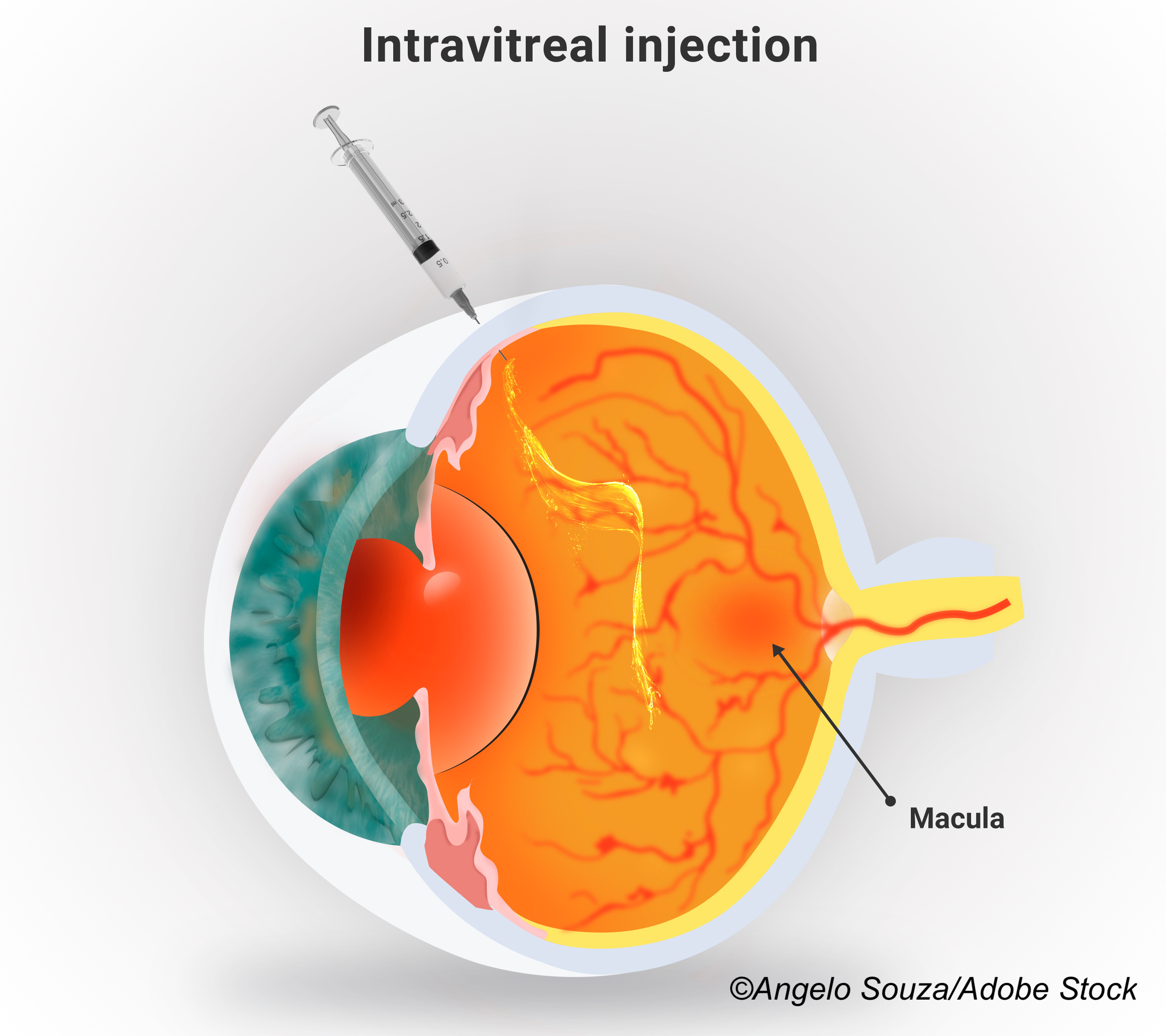
They conducted this post-hoc analysis of a phase III, randomized, double-masked, parallel group equivalence study, that included patients age 50 and older with nAMD and active subfoveal choroidal neovascularization lesions from 75 centers and nine countries.
Patients received intravitreal injections of SB11 or ranibizumab (0.5 mg) every 4 weeks through week 48 of the original study period. To measure immunogenicity, researchers analyzed serum antidrug antibodies (ADA) until week 52, and analyzed overall positivity with best-corrected visual acuity (BCVA) and central subfield thickness (CST).
The primary outcome of the study was change in BCVA from baseline to week 8, and change in CST from baseline to week 4. Secondary outcomes included adverse events, ranibizumab serum concentrations, and immunogenicity at differing time points.
Blood samples were collected before injections on day 1, and then at weeks 4, 8, 16, 24, and 36, and then at any day during weeks 1 and 52. Electrochemiluminescence immunoassay was used to measure ADA and NAb.
"Overall ADA status was defined as the accumulated count of ADA-positive results. NAbs were analyzed in ADA-positive participants. Overall NAb positive was defined as at least 1 positive Nab measurement at any time during the study (including baseline)," researchers explained.
In this analysis of 705 patients (mean age, 74.1 years; 57.2% women), the overall incidence of ADA-positivity was 4.9% at week 52. For BCVA, the least-squares mean difference between overall ADA-positive and ADA-negative patients up to week 52 was 1.6 letters (95% CI, –2.7 to 5.8; P=0.46), and for CST, 3 μm (95% CI, –23 to 29; P=0.83).
In all, 3.1% of ADA-positive patients experienced intraocular inflammation-related events, compared with 0.6% of ADA-negative patients.
In ADA-positive patients, mean serum ranibizumab concentrations over time were slightly lower compared with those in ADA-negative patients, with a maximum 16-week value of 1,389.3 pg/mL, and 1,665.4 pg/mL at 36 weeks.
"Results suggest that the incidence of antidrug antibodies was low for ranibizumab products, and its immunogenicity did not seem to have a clinically relevant association with their efficacy, safety, or PK profiles," concluded Woo and colleagues.
"The current post hoc analysis of a phase III trial by Bressler et al provides useful and important information because it is anticipated that many more biosimilar ranibizumab and aflibercept molecules will be approved in the future. According to a poll by the International Retina Biosimilar Study Group (Inter BIOS Group), many retinal physicians in Europe and the U.S. are concerned about the safety of biosimilars," wrote Baruch D. Kuppermann, MD, PhD, Gavin Herbert Eye Institute, University of California, Irvine, and colleagues in their accompanying editorial, adding that these results from Woo et al may help alleviate some of their worry.
"These findings support the biosimilarity of SB11/ranibizumab-nuna (Byooviz) and innovator ranibizumab (Lucentis), with no significant safety concerns identified for either version of ranibizumab in relation to immunogenicity. However, in addition to these significant findings, ongoing safety and efficacy data will be key factors in enhancing the confidence in clinicians toward the use of biosimilars," they wrote.
"[O]nce they are used broadly in the real world, biosimilars have the potential to provide comparable levels of patient care in terms of safety and efficacy compared with innovator molecules while significantly cutting costs for the health care system," concluded Kuppermann and colleagues.
Woo and fellow researchers noted that an important limitation of their study was the small number of patients with ADA or NAb during the study, and the limited availability of pharmacokinetic measurements.
Disclosures
This work was funded by Samsung Bioepis.
Woo reported being a consultant for Samsung Bioepis, Janssen, Novartis, Curacle, Novelty Nobility, Sometech, Rznomics; being an equity owner of Retimark and Panolos Bioscience; receiving grants from Samsung Bioepis, Novelty Nobility, Pharmabcine, Novartis, Alteogen, Geneuintech, and Curacle; and receiving lecture fees from Novartis, Bayer, Allergan, Abbvie, Retimark, and Alcon outside the submitted work.
Kuppermann has received grants from Research to Prevent Blindness, Allegro Ophthalmics, Allergan, Apellis, Genentech, Ionis, Iveric Bio, Novartis, Regeneron, and RegenXBio as well as personal fees from Aciveda, Allegro Ophthalmics, Allergan, Clearside, EyeBio, Eyedaptic, Genentech, Glaukos, InflammX, Iveric Bio, jCyte, Novartis, Regeneron, ReVana, Ripple, and Theravance.
Sources
Bressler NM, et al "Immunogenicity with ranibizumab biosimilar SB11 (Byooviz) and reference product Lucentis and association with efficacy, safety, and pharmacokinetics: A post hoc analysis of a phase 3 randomized clinical trial" JAMA Ophthalmol 2022; DOI: 10.1001/jamaophthalmol.2022.5403.
Sharma A, Kumar N, Kuppermann BD "Biosimilar ranibizumab and innovator ranibizumab—Immunogenicity assessment and its impact on safety and efficacy" JAMA Ophthalmol 2022; DOI: 10.1001/jamaophthalmol.2022.5543.