Older Adults Engaging in Cognitively Stimulating Activities Have Reduced Dementia Risk, Study Suggests
Separate study showed no link between meditation or learning a new language and enhanced cognition
07/14/2023
Salynn Boyles, Contributing Writer, BreakingMED™
Anupama Brixey, MD, Assistant Professor in Cardiothoracic Imaging, Oregon Health and Science University
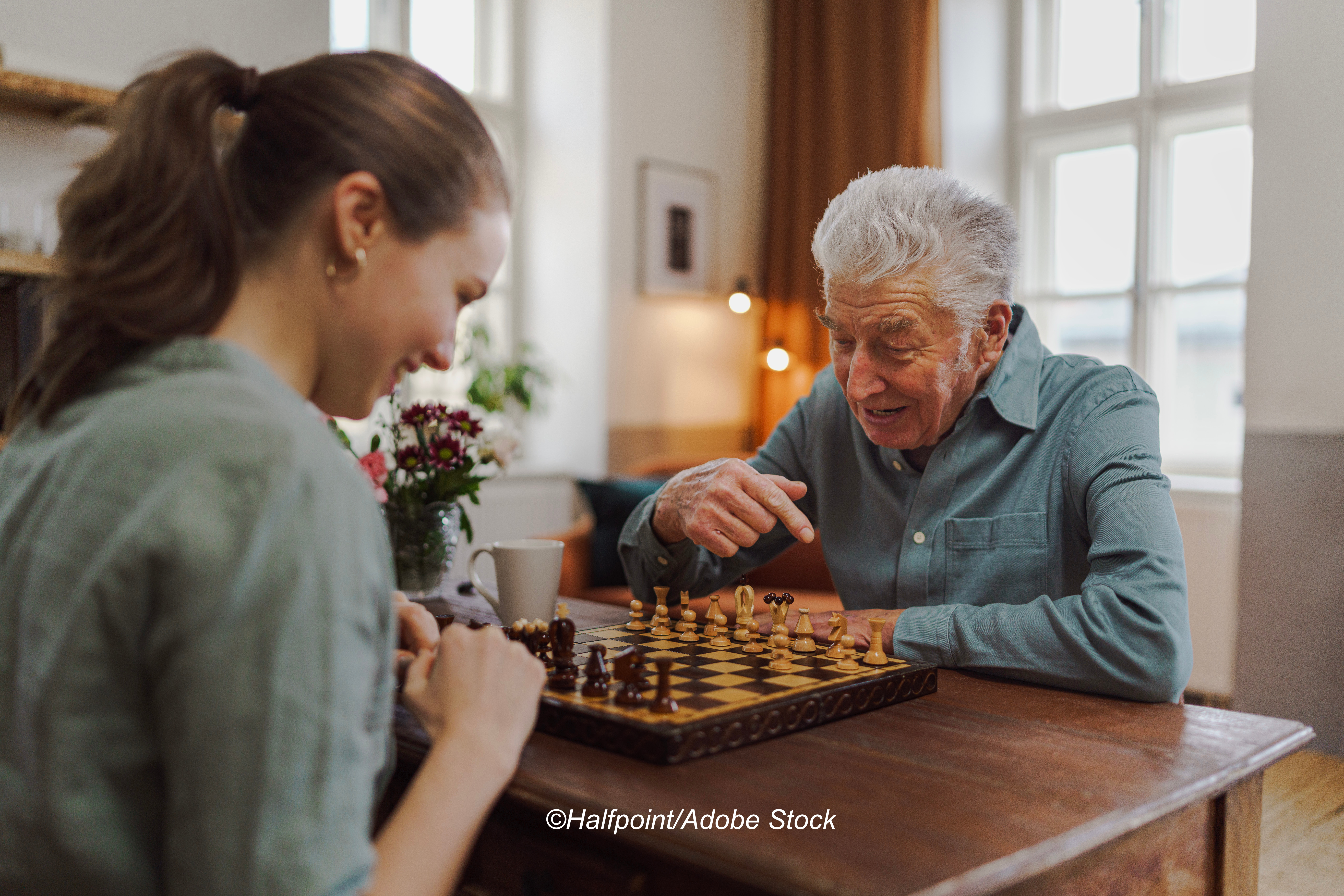
Older adults who engaged in cognitively stimulating activities such as taking classes, doing crossword puzzles, and playing chess had a reduced dementia risk over 10 years of follow-up.
In a separate analysis, neither meditation nor non-language training was found to enhance cognition in cognitively healthy older adults.
Older adults who engaged in cognitively stimulating activities such as taking classes, doing crossword puzzles, and playing chess had a reduced dementia risk over 10 years of follow-up compared to those who did not engage in these activities in an analysis of data from the ASPREE Longitudinal Study of Older Persons (ALSOP).
Engaging in passive mental activities (reading books or newspapers, watching television, and listening to music) was also associated with lower dementia risk, but to a lesser extent.
The study findings, published online July 14 in JAMA Network Open, "suggest that engagement in adult literacy, creative art, and active and passive mental activities may help reduce dementia risk in late life," wrote researcher Joanne Ryan, PhD, of Monash University, Melbourne, Australia, and colleagues.
"These associations remained even with the adjustment of key confounders, such as earlier education and socioeconomic status," the researchers wrote. "In contrast, the magnitude of interpersonal networks and the frequency of social activities was not associated with dementia risk."
In a separate secondary analysis of data from the Age-Well intervention study, also published July 14th in JAMA Network Open, neither meditation nor non-native language training was found to enhance cognition in cognitively healthy older adults.
Researcher Harriet Demnitz-King, MSc, of University College London, and colleagues, presented data on 135 cognitively healthy older adults who underwent 18 months of meditation training or non-native language training.
Cognition was assessed pre- and post-intervention using the Preclinical Alzheimer Cognition Composite 5 (PACC5) along with other measures of memory, executive function and attention.
At the end of the 18 months, there was no evidence that either intervention improved any of these cognitive measures, leading the researchers to conclude that "these findings suggest that neither meditation training nor non-native language training should be used as a method for improving cognition in cognitively healthy older adults."
The longitudinal prospective cohort analysis of the ALSOP study included data on 10,318 community-dwelling elderly (age 70 years and older) adults who were generally healthy and without major cognitive impairment at enrollment from early spring of 2010 through 2014.
The analysis included 19 measures of leisure activities and social networks assessed at baseline, which were classified using exploratory factor analysis.
Dementia was determined by an international expert panel according to Diagnostic and Statistical Manual of Mental Disorders (Fourth Edition) criteria and Cox proportional hazards regression was used to assess dementia risk over 10 years, adjusting for education, socioeconomic status, and a range of health-related factors.
The median age of the study participants at enrollment was 73.8 (IQR, 71.6-77.2) years, almost all (98%) were White, and just over half (52.6%) were female.
After adjustment for education level, socioeconomic status and health status, "more frequent engagement in adult literacy activities (e.g., writing letters or journaling, using a computer, and taking education classes) and in active mental activities (e.g., playing games, cards, or chess and doing crosswords or puzzles) was associated with an 11.0% (adjusted hazard ratio [AHR], 0.89 [95% CI, 0.85-0.93]) and a 9.0% (AHR, 0.91 [95% CI, 0.87-0.95]) lower risk of dementia, respectively," the researchers wrote.
Engagement in creative artistic activities (craftwork, woodwork, or metalwork and painting or drawing) (AHR, 0.93 [95% CI, 0.88-0.99]) and in passive mental activities (reading books, newspapers, or magazines; watching television; and listening to music or the radio) (AHR, 0.93 [95% CI, 0.86-0.99]) was also associated with reduced dementia risk.
Surprisingly, the analysis failed to show an association between having more interpersonal networks, social activities, and external outings and decline in dementia risk.
"Social cohesion has been considered a protective factor against dementia and a well-established protective factor against cognitive impairment," Ryan and colleagues wrote, adding that their finding "may be driven by the fact that most participants were well engaged socially, with only a small proportion being lonely or isolated."
"As such, our analysis largely compared individuals with moderate and large social networks. It is plausible that the current participants who all remained cognitively intact into later life have already built cognitive reserve to some extent via prior life experiences. Thus, it may be reasonable to tailor the strategies of cognitive aging according to social engagement and health status to maximize the use of health resources."
Study limitations cited by Ryan et al. included the possibility of selection bias, the lack of racial/ethnic diversity in the cohort, and the possibility of reverse causality in interpretation of the study findings.
Demnitz-King and colleagues also cited the homogeneity of their cohort as a significant study limitation.
"Participants, particularly in the no-intervention arm, were highly educated and healthy," they wrote, noting that this limited the generalizability of their findings.
Disclosures
The ASPREE clinical trial was supported by the NIA, NCI and NHMRC of Australia and by Monash University and the Victorian Cancer Agency. The Age-Well RCT is part of the Medit-Ageing project funded by the European Union.
Sources
Demnitz-King H, et al "Effects of meditation training and non-native language training on cognition in older adults: a secondary analysis of a randomized clinical trial" JAMA Netw Open 2023; DOI: 10.1001/jamanetworkopen.2023.17848.
Wu Z, et al "Lifestyle enrichment in later life and its association with dementia risk" JAMA Netw Open 2023; DOI: 10.1001/jamanetworkopen.2023.23690.